
🎧 Listen to this episode on Earth Witness | Apple Podcasts | Spotify
Today we take up samyak karmanta, True Action, which as the term suggests, we could also call Right Karma. At its root, karma is simply cause and effect. One billiard ball strikes another, which strikes another, which strikes another, in a universe of infinite billiard balls, in a net of causation that extends across all history right back to the Big Bang – and, I suspect, to infinite Big Bangs before that one.
But this is, of course, absurdly simplistic. Quantum physics raises notoriously abstruse questions about the mechanistic billiard-ball model, and thousands of years of Buddhist metaphysics raise many more. To start with, no billiard ball exists all on its own; from the beginning each exists in a universe with countless other billiard balls, all interacting simultaneously. In other words, everything exists in relationship to everything else, always, and so the cause and effect of any event can never be separated from all other events. In Buddhism this is called the doctrine of dependent origination or interdependent arising. On the other hand, Buddhism also teaches that all things are subject to change and thus are empty of any fundamental essence. This being so, isn’t the whole relational universe also empty? Why even worry about it?
Here I’ll stop and reassure you that this isn’t an essay on Buddhist metaphysics or causal theory. Our concern is personal and practical, with how our own actions affect ourselves and the world. This isn’t a matter of erecting philosophical edifices. It’s more like taking a walk, or going dancing. So, dance with me.
As with many of the Eight Limbs, samyak karmanta is traditionally taught in terms of restraint, and we’ll start our dance there. Here we consider the karmic consequences of actions taken with our bodies, particularly in regard to four of the Buddha’s Five Precepts: not to kill, not to steal, not to abuse sex and not to abuse intoxicants. While these precepts are concerned with ethics and we can thus readily view them through an intellectual lens, note that taken literally, all involve actions taken with our bodies. As we turn to each, we might consider how abiding by them affects the body’s energy.
Not to kill is primarily concerned with killing sentient beings, which is to say, humans and animals. While it may seem obvious that murder is a terrible act, collectively we have a bad habit of finding reasons why it’s sometimes okay, especially if those being murdered live on the other side of the globe. Personally I’m deeply skeptical of any rationale for war and mass violence, because the karmic consequences of such actions are simply beyond human comprehension. If you doubt this, just consider how frequently those waging wars predict easy victories, only to retreat in humiliation years later. It would be infinitely better to abide by the Hippocratic oath: “First, do no harm.” This is synonymous with the practice of ahimsa, non-harming, in recognition that violent retribution invariably provokes more violence in response, leading to a swirling cyclone of harm that forever threatens to engulf the world.
Today, recognizing our interconnection, we also need to extend this concern to all living beings, in particular the natural ecosystems animals and humans alike depend on. For many Buddhists, this means a vegan or vegetarian diet. Eating provides our most immediate point of connection to the living world, and to eat unconsciously does great harm to ourselves and others. Protecting and restoring natural ecosystems is also hugely important; it’s insane to think that we can forever turn forests into parking lots without reaching critical tipping points.
Not to steal, or not to take what is not given (as it is often framed), means above all to turn away from greed and toward generosity and giving. It’s striking that in the wealthiest nation in the world, we’re surrounded by examples of dizzying inequality. When we enshrine greed as virtue rather than vice, we turn our sense of right and wrong upside down and render individuals into small, grasping caricatures.
On the other hand, dana, the spirit of giving or generosity, is considered in Buddhism to be the root of all virtue. When we shift our posture away from greed and toward giving, we move away from small-mindedness and petty defensiveness and toward gratitude, openness and acceptance. Regardless of our actual wealth or social position, this is the true key to a happy, fulfilling life. Wherever we are, whatever our circumstances, we can be grateful for what we have, because ultimately all life is a gift, and every moment we have is a treasure. Practicing generosity and gratitude in this way is also deeply healing emotionally, enabling a positive outlook that calms us through the most serious conflicts and misfortunes.
Not to abuse sex means above all honoring our relationships while keeping free of sticky entanglements (if you’ll excuse the phrase). Historically for monks this simply meant celibacy, while for married laypeople it meant not seeking sexual contact outside of marriage. In the modern world, we may protest that things are more complicated. Our courtship rituals, in particular, seem to have fallen apart, dating steadily sinking into a morass of unspoken expectations, with no two parties exactly in agreement. At the same time, we naturally desire sensual fulfillment and physical connection with others, and loneliness and fear of reaching out can be its own kind of dysfunction. My suggestion is to keep it simple. If we find our desires are leading us into difficult entanglements, much less active betrayals, it’s time to step back and reassess.
Also, for the love of all that’s good, don’t get wasted and do something you’ll regret. Better yet, just don’t get wasted! This reflects our final precept, not to abuse intoxicants. Historically, this precept specifically referred to alcohol, while today it’s usually extended to intoxicants generally; but among recreational drugs, alcohol is far and away the most prevalent and the most destructive – a prime factor in car accidents, violent crimes, and countless other damaging incidents, physical and social. Then there’s the harm done to your body – serious harm in the case of alcoholism, and the ordinary violent nausea of a hangover for even occasional drinkers, which disrupts your life and threatens your job.
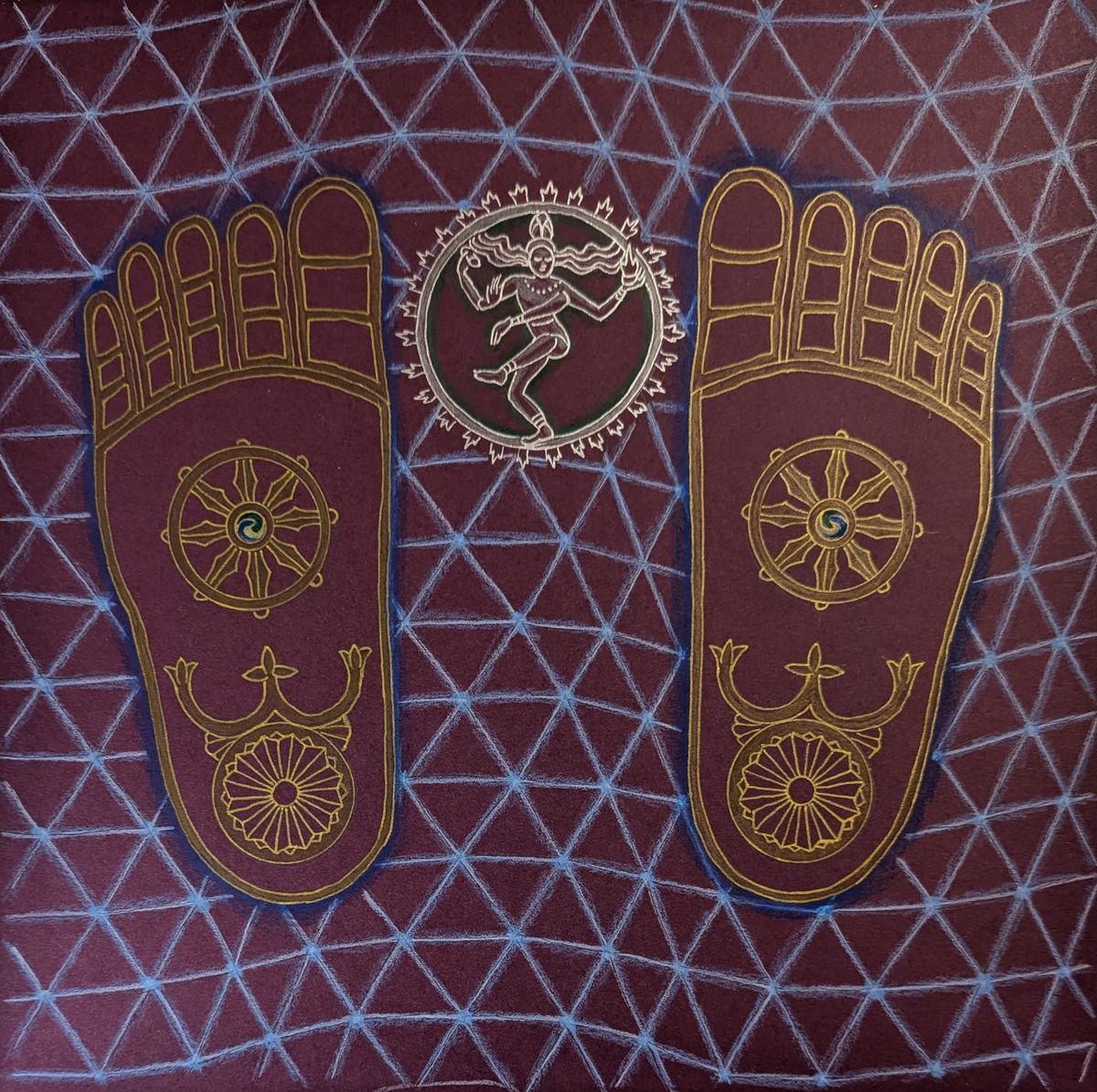
In following the Precepts, we follow in the footsteps of the Buddha; and as it happens, the Buddha’s footsteps are also one of the oldest Buddhist symbols, predating by centuries any depiction of the Buddha as a human being. Marked on each sole with the Dharma wheel (Dharmachakra), along with other auspicious symbols, the footprints at once symbolize the Buddha’s humanity (unlike gods and spirits, he actually walked the earth) and his traceless enlightenment – which is to say, though he acted powerfully in the world, he left no lingering karma to address in a later life. Put in terms that don’t require a belief in reincarnation, he didn’t leave any mess for future generations to deal with. Consider verse 92 of the Dhammapada:
… For those whose resort is the liberation that is empty or signless,
like the birds in the sky, their track is hard to find.
– https://suttacentral.net/dhp90-99/en/anandajoti?lang=en&reference=none&highlight=false
Interestingly, the word for the Buddha’s footprints in Sanskrit is Buddhapada. Pada means “foot” or “step,” and it’s the very same pada we find in the title of the Dhammapada (or Dharmapada in Sanskrit). Here it refers to a poetic verse or phrase, much as in English we can refer to the “feet” of a line of poetry, which is to say, its meter. So Dhammapada can mean “Dharma verses,” but it can also mean “Dharma steps” or “Dharma path.”
We have so far been using footsteps as metaphors for action, but of course meditative walking is also a core Buddhist practice going back to the Buddha himself. Walking is one of the “four postures” alongside sitting, standing and lying down, described in the Satipaṭṭhāna Sutta (“The Discourse on the Foundations of Mindfulness”). Core to mindfulness practice is the conscious awareness of each step or each posture as it is taken:
When walking, a monk understands: 'I am walking.' When standing, he understands: 'I am standing.' When sitting, he understands: 'I am sitting.' When lying down, he understands: 'I am lying down.' And he understands accordingly however his body is placed.
– https://suttafriends.org/sutta/mn10/
In Zen, walking practice is called kinhin, and is performed between each round of seated meditation both to relieve the body of stiffness and to develop mindfulness in motion. In Soto Zen, monks walk very, very slowly, placing the foot with utmost care, heel, arch, ball, toes. Walking like this requires intense attention, and it’s a real lesson just to watch a monk practice this way, body and mind settled, infused with a profound dignity and purpose.
But any action can be performed with similar focus and intention. The Zen master Nakagawa Soen was said to turn any commonplace action into a kind of ceremony by dint of his attention, the recognition that every single act, no matter how small, is inseparable from the great motion of the cosmos, the rise and fall of the sun, the movement of the moon and stars in the night sky. With attention, the mundane becomes sacred, the sacred becomes mundane. When we pour tea, a mighty river flows through the spout; when we make offerings on the altar, it’s just like feeding the pigeons in the park.
Nowhere is motion more fused with highest purpose than in dance. I love to dance. I find dancing an altogether remarkable activity, at once high art, aerobic exercise, a celebration of life and the joy of movement. While it can mean many things and is one of the great metaphors for our lives, in its immediacy it serves no purpose outside of itself, and thus resides as one of the purest expressions of being. Alan Watts said it beautifully:
… The physical universe is basically playful. There is no necessity for it whatsoever. It isn’t going anywhere. That is to say, it doesn’t have some destination that it ought to arrive at.
But that is best understood by the analogy with music. Because music, as an art form, is essentially playful. We say, “You play the piano.” You don’t work the piano.
Why? Music differs from say, travel. When you travel you are trying to get somewhere. In music, though, one doesn’t make the end of the composition the point of the composition. If that were so, the best conductors would be those who played fastest. And there would be composers who only wrote finales. People would go to a concert just to hear one crackling chord… Because that’s the end!
Same way with dancing. You don’t aim at a particular spot in the room because that’s where you will arrive. The whole point of the dancing is the dance.
… We thought of life by analogy with a journey, a pilgrimage, which had a serious purpose at the end, and the thing was to get to that end, success or whatever it is, maybe heaven after you’re dead. But we missed the point the whole way along. It was a musical thing and you were supposed to sing or to dance while the music was being played.
– Alan Watts, “Life is Not a Journey”
As in dancing, so in the whole scope of our lives. We take one step, then another, and suddenly we are spinning like the whirling dervishes of the Sufi tradition, not dizzyingly, but with grace, poise and balance. Sometimes the rhythm is slow, sometimes poundingly fast. Sometimes the steps are simple, sometimes intricate. Sometimes we’re just making it up, feeling our bodies right now, and it’s not anxious: it’s glorious, it’s wonderful. In the midst of tremendous motion we find a radiant stillness of the heart-mind.
Conversely, when we sit very still, as we do in meditation, we find ourselves dancing with the whole living world. Time is not static, and silence is not a frozen absence of sound. Each moment overflows with sensation: the cough of our neighbor, the zoom of the cars on the street, and yes, our aching knees and backs. The dance is how we engage with these phenomena, and to fully enter the moment is to be swept up in the eternal flow.
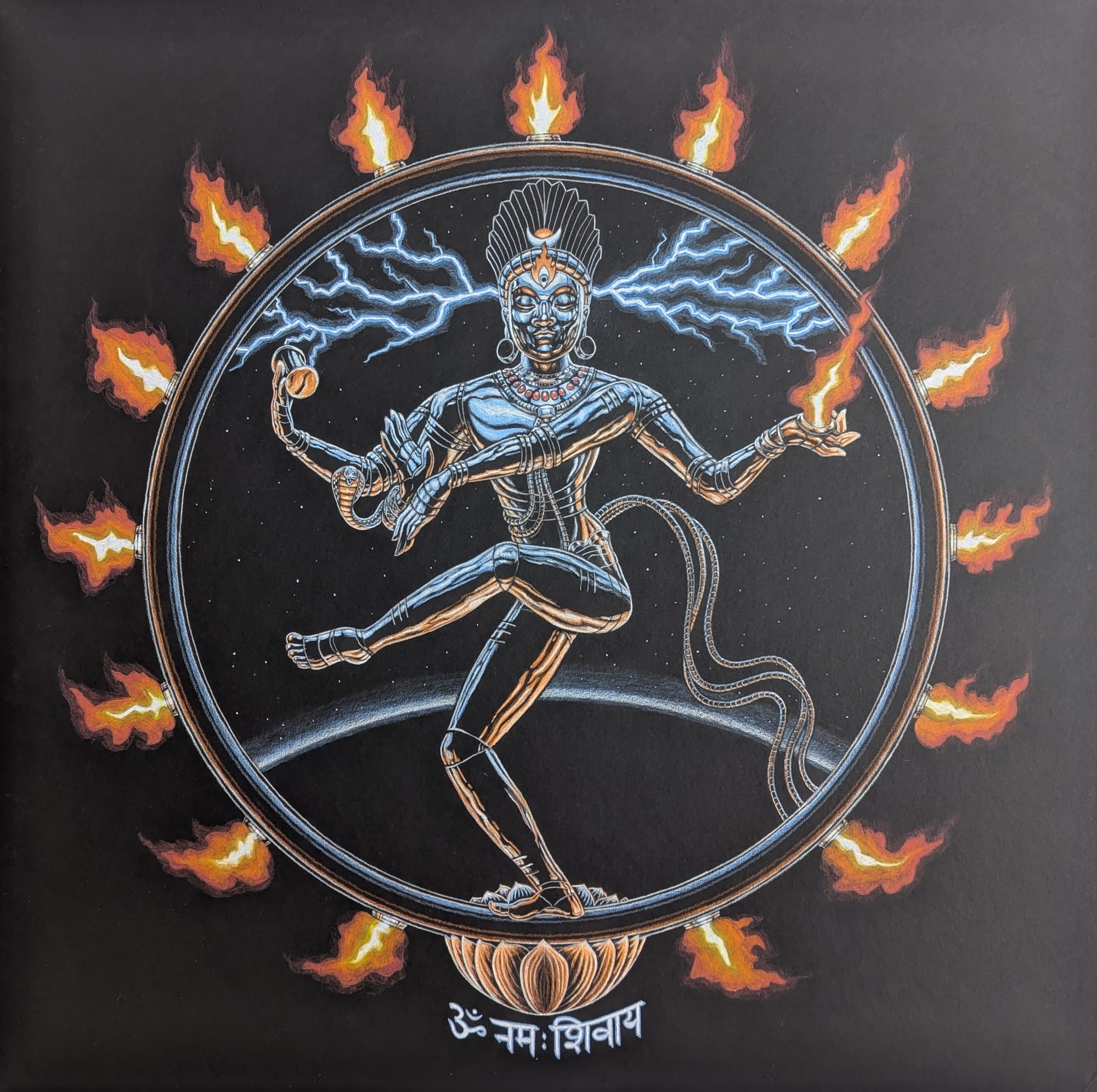
In Hinduism this is represented in the striking figure of Shiva Nataraja, Lord of the Dance, who stands on one leg with the other foot raised, his many arms extended, holding a drum in one hand and the Eternal Flame in another, his dance continually creating, preserving and destroying the whole universe. We can find a Buddhist cognate in the Thousand Hands of Kannon, which ceaselessly reach out to liberate all beings.
We can also find a lesson in those standing at the edges of the dance floor. Faced with the perfectly ordinary fear of looking stupid, they never get started, and so they miss everything. Don’t let it be you! When the time comes, you have to move. And remember that good dancers don’t start that way. They know that grace comes with repetition, that ease comes with practice, that certainty can only be found with decisiveness.
I’ll say that again: you have to decide to step forward. Sometimes deciding is easy, but other times it’s very, very hard. Shiva’s dance is beautiful, but it’s also terrifying. It encompasses every joy of human existence and every horror, from your first kiss to the bombs at Hiroshima and Nagasaki. When we face reality squarely we face the absolute along with the relative. It’s worthwhile in this vein to reflect deeply on death; because if you see your end clearly, you will throw yourself into life with everything you have.
Zen masters are famous for this kind of decisive action, an instantaneous response to changing circumstances. This is the sweep of the sword of Manjusri, bodhisattva of transcendent wisdom, which in a split second cuts off delusion. D.T. Suzuki observed the importance of decision in the samurai ethos: faced with life and death consequences, the samurai must act without hesitation, and the most effective action, one it is decided upon, is the one to which we commit absolutely.
But be careful. Manjusri’s sword also reminds us of what’s at stake: its stroke is irrevocable. There’s also value in patience, value in quiet reflection if no decision is pressing. Don’t let a fear of hesitation or of being seen as indecisive stop you from taking the time you need. A reckless charge forward might feel satisfying, but it’s rarely wise.
These principals apply as much to communities as individuals. Too often I’ve seen organizations that seemed incapable of acting boldly, incapable of committing to a course of action even when they were clearly suffering from stagnation or worse, and we need to see that a failure to grow is the beginning of spiritual death. It also tends strongly to provoke backlash, pressure building underground until it erupts. This is easy to see at the national level, where the lack of visible progress, the lack of material improvements in people’s lives, ends with the election of officials promising nothing but disruption. It turns out that a lot of people would rather suffer through a dumpster fire than slowly suffocate at the bottom of the heap.
The modern era is a dangerous one, and the flames are licking at our doorstep. Between steadily increasing global temperatures, the widespread threat of forest fires and incendiary weapons of war, this is more literally true than is comfortable.
But remember that the fire Shiva wields is also the means of purification and renewal. Amid the flames, we just take one step, and then another, not from fear but from fierce joy. We choose this life. We choose to celebrate in the face of grief, to come together amid dissolution, to act with purpose in a time of deep uncertainty. Just take a step, and as Zen Master Hakuin says, “Our dancing and songs are the voice of the Dharma.”
Member discussion: